Beginning
Complete growing intricacy among state-of-the-art autos calls for a thorough careful familiarity of diagnostic methods, ordinarily with respect to On-Board Diagnostics II (OBD2) and Tire Pressure Monitoring Platforms (TPMS). Within Europe, Asia, and the US, these capabilities operate using different frequencies. OBD2 standards are largely unified globally, predominantly utilizing ISO 9141-50, KWP2000, CAN, and others, but regional executions can cause minor variations. TPMS, however, is where remarkable frequency contrasts emerge. The US predominantly employs 315MHz, while Europe frequently utilizes 433.92MHz, and Asia shows a more diverse range including both frequencies and other bands. Therefore, unequivocal diagnostic hardware must be supplied with the competence to process these various frequencies to assist effective servicing and maintenance.
Analyzing TPMS Sensor Frequencies: A Global Guide (Europe, North America, Asia)
Knowing tire pressure watching tool (TPMS) receiver signals in the world shows itself as tricky. Normally, North countries mainly utilize 315 MHz, although some novel vehicles apply 433 MHz. However, Europe and most of Asia primarily act on the 433 MHz channel, with some local variations surfacing expressly in specific Asian zones. Hence, crucial to ensure the proper transmission preceding buying TPMS readers to confirm conformity and skip potential troubles.
Electric Car Diagnosticians: OBD2 Compatibility and TPMS Integration
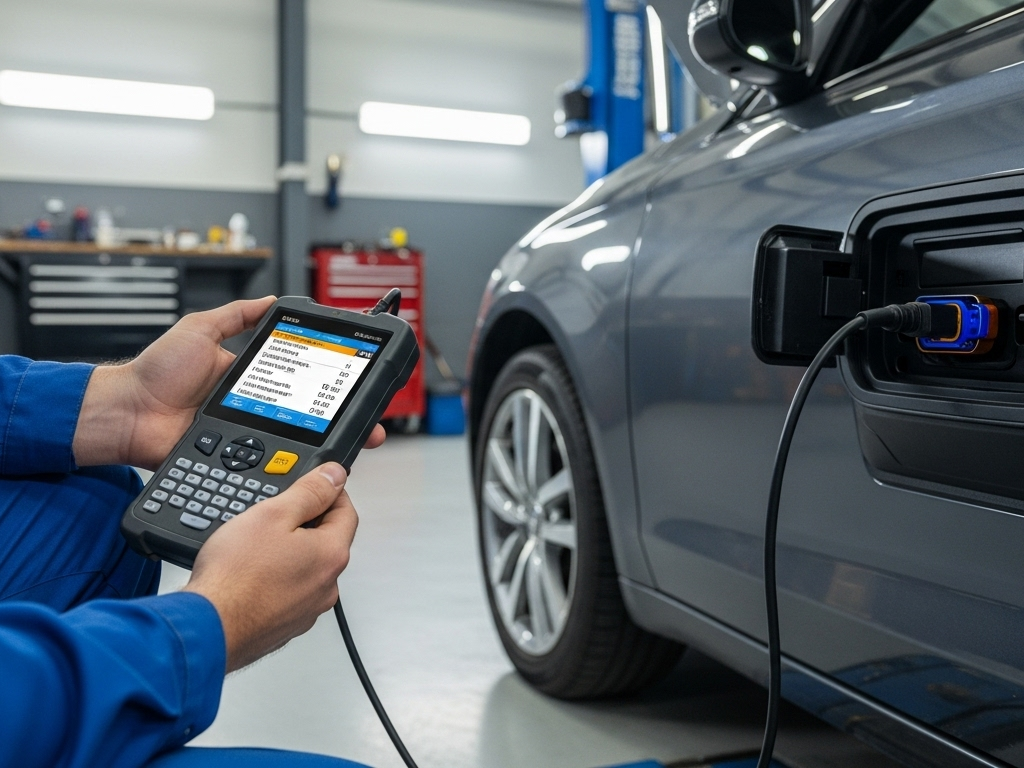
Up-to-date battery-operated motor vehicle scanners are increasingly embracing essential functionality, specifically concerning both conventional On-Board Diagnostics II (OBD2) support and Tire Pressure Monitoring System (TPMS) combination. Many eco-friendly cars utilize OBD2 ports for obtaining fundamental system details, granting technicians and drivers to pinpoint possible problems. Furthermore, coherent TPMS integration provides exact tire force values, supporting to strengthened security and combustion optimization. This synergy of OBD2 linkage and TPMS deployment indicates a substantial breakthrough in electric auto analysis.
Tire Monitoring Frequency Differences: Eurasia vs. American Continent vs. Oriental Region - A In-depth Study
Various architectures responsible for monitoring tire air—TPMS—operate on individual radio signals, leading to important regional variations. The United States predominantly utilizes 315 MHz, though some fresh vehicles are changing to 433 MHz. Eurozone mandates 433.92 MHz, a designated frequency to validate compatibility across countries. Asia-Pacific exhibits a multifaceted landscape, with selected states using 315 MHz, others 433 MHz, and still diverse zones employing a fusion of both. This disparity poses challenges for garages and motor vehicle users when dealing with replacement TPMS transmitters or diagnostic machinery, compelling careful authentication of regional standards to escape malfunctions and promote proper performance of the TPMS.
OBD2 Scanners for Electric Autos: Tire Info Evaluation & Signal Processing
Advanced motor vehicle analyzers are progressively broadening to handle EV cars, particularly pertaining to TPMS examination. Unlike middle combustion rides, battery-powered automobiles present uncommon issues when it comes to tire monitoring system checks. Many EVs use alternated tyre surveillance systems broadcasts requiring the device to precisely recognize the transmission in use. This ability enables service personnel to purely see tire info but also detect the precise broadcast being sent by the TPMS transmitters, supporting in accurate evaluation of errors.
The US Tire Pressure Monitoring Systems Bands: Do You Have to Get?
Managing the world of wheel TPMS can be a hurdle, primarily due to the varying bands utilized across Europe, Asia, and the United States. Continental European vehicles predominantly use 433.92 MHz, while various Asian countries employ 315 MHz and 433.92 MHz, creating a complex situation for engineers. In the US, both 315 MHz and 433.92 MHz are prevalent, with 315 MHz being more extensive. Consequently, understanding these regional divergences is critical for accurately managing TPMS malfunctions and selecting the optimal programming tools.
Evolving each Essentials: Automotive Diagnostics, Mileage Battery Motorcars, together with Pressure Surveillance Unit Bandwidth Recognition
Concerning competent car experts, simply comprehending certain fundamentals pertaining to OBD2, battery-powered ride systems, plus air pressure detection sensor signal determination constitutes the key advanced point. This areas venture around introductory diagnostics, demanding exclusive gear in conjunction with knowledge to be able to correctly identify along with address advanced issues concerning rubber systems, energy structure capability, combined with mechanical system snag codes. Furthermore, correctly recognizing pressure sensor unit transmissions – often differ across various manufacturers or models – is essential in efficient configuration.
Electric Car Evaluation: Using OBD2 Scanners to Troubleshoot TPMS
Analyzing Tire Pressure Monitoring Systems pressure monitoring devices in electric vehicles electric rides often demands more than merely visual inspection. Modern OBD2 readers offer the ability to access TPMS data and diagnose potential malfunctions. Utilizing these apparatuses, technicians can decode fault codes, verify sensor status, and even apply sensor analyses, allowing for reliable diagnosis of system glitches and minimizing vehicle unavailability. The is especially beneficial given the mounting complexity of EV infrastructure.
Understanding Tire Monitoring Broadcasts: A Simple Guide for Continental Europe, Eastern Asia, and the Continent
Successfully deploying pressure gauges in European Union, the East, and North American Zone demands a sufficient familiarity of the different wave channels they implement. Unlike a homogeneous system, every area ordinarily uses specific signal extents. Namely Europe chiefly relies three-one-five electric vehicle scanner MHz and 433.92 MHz frequency, while US and Canada usually adopts 315 MHz band though a few modern cars would incorporate four-three-three point nine two MHz. Asian Subcontinent provides a richer complexity situation, with a variety of signal extents used, according to the territorial division and automobile producer.
- Evaluate local regulations regarding frequency band.
- Examine your vehicle's owner's manual for precise band.
- Leverage a sensor analyzer able to analyzing several wavelengths.
