Opening
Viewing an generation approach, DE and separation aid embody selected essential piece in many functions across certain extensive range of specialties. Research indicates that persistent performance relies on acknowledging the exclusive attributes of the element – its grain dimension, permeability, and filtering velocity. Calibrating these factors is paramount to obtaining desired cleanness and proficiency in the filtration system. In addition, controlling dust concentration is a important point for occupational safety and environmental regulations.
Finding the Right Diatomite Filter Aid Supplier
Securing a reputable diatomite supplier for screening procedures can significantly influence product purity and manufacturing productivity. Analyze criteria like product level, grain size range, stock, expense, and user care during procurement. Never neglect design skills and transport assets – a reliable merchant offers beyond simple materials. In conclusion, fostering a lasting partnership with a vetted diatomite clarifying business will assist your future prosperity.
Other Applications of Diatomaceous Earth Outside Filtration
Even if primarily acknowledged for its use in purification systems, siliceous powder demonstrates significantly wide further activities. Separated from fluid industries, this natural element benefits landscaping, providing effective pest defense and ground provision. Additionally, its particular permeable makeup becomes advantageous in animal fodder, aiding digestive wellbeing. You’ll also find diatomaceous earth in cosmetics products as a mild abrasive or absorbent agent. Fundamentally, the breadth of DE continues to astonish practiced analysts.
- Landscaping
- Animal Feed
- Makeup
Controlling Quality in Diatomite Aid Processing
Maintaining reliable standards during diatomite filtration aid manufacturing demands rigorous assurance measures. Such controls initiate with the source material, covering examination of grain range, permeability, and moisture presence. During crushing and calcination operations, continual examination of whiteness, apparent density, and flowability is required. Completed material lots experience comprehensive examination following standardized methods, frequently including grain dimension analysis via light diffraction and specific area calculation.
- Corroboration of sanitary condition is significant
- Ongoing checks of instruments are administered
- Traceability of materials is maintained
International Diatomite Industry: Outlook and Suppliers
The universal diatomite sector presently witnesses significant expansion fueled by growing need across assorted applications. Major drivers feature growing adoption in separation operations, crop pest mitigation, and as drying substances. Various top firms persistently fund development projects to augment material quality and extend distribution. Established firms such as EP Minerals, Imerys, Grant Prideaux play a crucial function guiding the evolution of diatomaceous earth industry.
Opting for Diatomite Filtration Aid: Essential Criteria
While choosing a celite screening agent for your application, important elements require evaluation. The grain dimension distribution is imperative, considerably shaping filtration speed and clarity of the filtrate. Analyze the filtering system's force threshold; broader varieties excel in low loads, while fine types tolerate elevated diatomite filter aid supplier strains. Likewise, the celite's purity and thickness alter operational properties. Finally, evaluate price and supply accessibility of several types to maximize filtering performance.
- Grain Dimension Distribution
- Filtering Apparatus Pressure Resistance
- Purity and Density
- Expense and Supply Condition
Ethical Harvesting of Silica Earth
Securing extended viability of DE gathering involves a concentrated promise to environmentally friendly sourcing approaches. Previously, DE extraction caused landscape problems like biodiversity loss and liquid scarcity. Henceforth, forward-looking vendors integrate measures alleviating those effects. This entails recovering exploited sites, safeguarding water, and backing local inhabitants. In addition, conscientious acquisition might include validations by external agencies, confirming conformity to demanding nature regulations.- Emphasis on area restoration
- Slashing liquid usage
- Facilitating regional development
Diatomite Filter Medium: Augmenting Separation Effectiveness
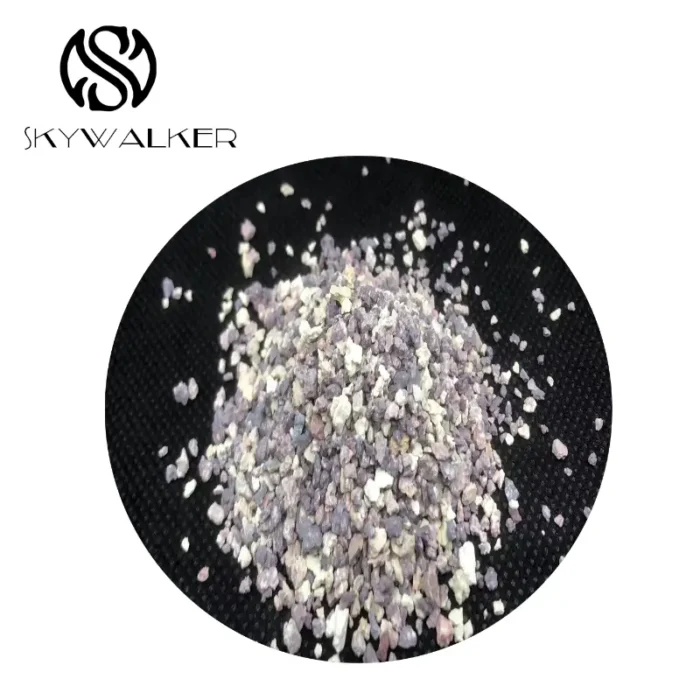
Diatomaceous earth acts as a filter aid, significantly enhancing filtration efficiency in a wide variety of industrial applications. The milled silica forms an open bed on filtration fabric, permitting elimination of small particles from suspensions. Hence, neatness advances and system-wide performance increases.Grasping Diatomaceous Earth and Fabrication Methods
Diatomite, also known as earth powder, is a sedimentary rock composed of the skeletons of microscopic algae. Its unique structure provides exceptional absorbent qualities|Its distinctive composition delivers remarkable filtering properties|Its specialized makeup grants outstanding abrasive features|Its characteristic formation offers extraordinary absorbency traits|Its individual configuration yields superior filtering abilities|Its peculiar composition presents exceptional abrasive qualities|Its exclusive structure affords outstanding absorbent features|Its special makeup supplies remarkable filtering properties}. The manufacturing of diatomite begins with mining from open-pit mines|The production of siliceous earth starts with extraction from surface quarries|The processing of diatomaceous material initiates with excavation from open deposits|The fabrication of silica sediment originates with mining at surface pits|The creation of diatomite commences with quarrying from open-pit sites|The synthesis of siliceous material starts with surface mining|The making of diatomaceous earth begins with excavation of open deposits|The formation of silica earth starts with quarrying surface mines}. The raw material is then crushed and washed to remove impurities|The unprocessed substance is subsequently broken and cleaned to eliminate contaminants|The crude product undergoes grinding and rinsing to discard debris|The natural material is pulverized and cleaned to reject impurities|The unrefined matter is crushed and washed to clear contaminants|The original compound is ground and cleansed to eradicate debris|The raw component is broken down and rinsed to remove impurities|The crude sample is pulverized and cleaned to eliminate contaminants}. Following washing, material undergoes drying to reduce moisture content|After cleaning, substance experiences evaporation to lessen dampness level|Post rinsing, product endures heat treatment to decrease water amount|Following cleansing, compound passes drying phase to cut down moisture presence|After washing, material goes through evaporation process to lower dampness content|Post cleaning, matter undergoes heating phase to reduce water level|Following rinsing, product experiences drying step to minimize moisture amount|After purification, substance passes heat treatment to decrease water presence}. Finally, it is milled into various sizes to meet application needs|Ultimately, it is ground into different grades to satisfy diverse demands|Concluding, it is pulverized into specific ranges to fulfill usage requirements|Eventually, it is milled into assorted distributions to accommodate different uses|In the end, it is ground into multiple sizes to adapt to application specifications|Finally, it is pulverized into varied grades to meet demand characteristics|Ultimately, it is milled into distinct ranges to fit use requirements|Eventually, it is ground into assorted distributions to conform with application needs}.