This age-old historical sword functions as a remarkable piece of craftsmanship, but say you want to convey your personal design? Customizing your cutting tool is a deep journey, allowing you to construct a truly one-of-a-kind piece. From the shaft wrapping and habaki to the protector design and hamon, each part offers a chance for individual flair. This inquiry delves into the realm of katana enhancements, providing perspectives for both novices and expert enthusiasts seeking to imprint their endorsement on the ancient art of the samurai.
Newcomer's Original Fabrication
For people excited to embark on the advantageous journey of katana handling skills , 1060 steel katanas bring an superb entry point. This defined grade of essential steel strikes a nice compromise between value and proficiency. While never as hard as upper-echelon steels, 1060 facilitates a fair level of whetting, making it appropriate for learners to acquire the foundations of blade preservation and appreciate the elegance of handcrafted Japanese weaponry. It’s a excellent choice for establishing experience without the fiscal burden of more elite steels.
T Gear Steel Weapons : Combining Potency and Reasonableness
Satisfying enthusiasts seeking an authentic katana experience without breaking the bank , T10 steel katanas represent a promising option. These daggers offer a considerable improvement in lastingness compared to inferior alternatives, exhibiting satisfactory edge retention and tolerable flexibility for primary severing techniques. While not rivaling the outstanding characteristics of elite steels like T100 or folded alloy , T10 provides a impressive blend of functionality and profitability, making them a appreciated choice for rookies and those on a small financial .
Past the Blade : Enhancing Your Edge's Ornaments and Handle
While the glazed cutting edge is undeniably the main point of a katana, truly refining its magnificence lies in the precise customization of its components and grip . This approach allows admirers to demonstrate their inimitable design . Explore the vast possibilities: menuki - decorative embellishments that add visual charm ; the hamon encasements – often artistically sculpted ; the tsuka heart itself, wrapped in conventional ito yarn; and the fusa cap, which can be created from various materials like ingots or antler .
- Adopt concepts that echo with you.
- Explore with different ingredients .
- Emphasize strength for a enduring mark .
The Allure of the Katana: History, Craftsmanship, and Steel
This traditional armament bears a unparalleled allure, steeped in ages of oriental history and practice . More than merely a implement of fighting , it's a figure of the bushi ethos – a fusion of dexterity and rule. Its evolution spanned various generations, with early cutting tools evolving into the elegant curvature and fatal edge we distinguish today. The construction involved is truly extraordinary , requiring long periods of coaching to complete. The process involves a involved folding of refined metal , creating layers that fortify the blade's flexibility and severing ability. Diverse schools of fabricating came about , each with their particular secrets and processes for achieving the finest harmony and cleanness - a truly heavy pursuit.
- Early Katana shapes
- The purpose of the samurai blade in fighter class culture
- Time-honored fabricating procedures
Identifying the Fitting Steel for Your Katana Project: 1060 vs. T10
Electing the ideal steel is fundamentally important for any armament project, and the option between 1060 and T10 can be complicated. 1060 is a prevalent American compound, offering a fair balance of resilience and sturdiness, rendering it somewhat easy to process. However, T10, a from Japan steel, typically boasts better wear endurance and can potentially achieve a higher final hardness, although it can be relatively laborious to control and requires meticulous heat conditioning. Consider your proficiency and intended outcomes: for a trainee, 1060 wakizashi may be a safer platform, while the seasoned smith might seek the extra merits of T10.
- User-friendliness of Controlling
- Corrosion
- Peak Hardness
Opening the Possibilities: Elite Katana Enhancement Procedures
Becoming proficient in blade modification extends far beyond basic whetting. Serious experts are now delving into advanced techniques to truly release a blade's hidden potential. This features intricate work with the temper line, utilizing specialized resources for differential strengthening and carefully choosing the outline of the protector to optimize balance and performance. Beyond purely functional customizations, artisans are increasingly focused on producing unparalleled aesthetic splendor, through complex incising and layered finishes that truly transform a katana into a fine art.
Shaping Rough Steel into Perfection: Making a 1060 Sword
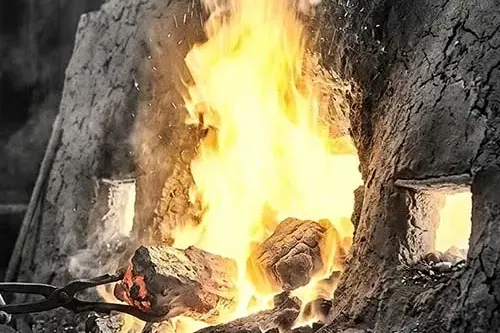
The journey starts with average 1060 metal , a strong material far away the deluxe katana it will transform . Proficient bladesmiths utilize a sophisticated process of layering and hammering the raw steel, repeatedly firing it and flattening it to discard impurities and build a uniform grain structure. This exhausting process, often lasting for periods , builds the fundamental resilience and suppleness characteristic of a standard Japanese weapon . Extra heat refinements, including controlled hardening and setting , are vital to achieve the aimed equilibrium of sharpness, endurance and splendor .- Folding: Eliminates impurities and produces grain structure.
- Fabricating: Shapes the steel into the initial blade form.
- Annealing: Establishes the final hardness and flexibility.
The Lasting Drawing of the Katana: An In-Depth Look at Metal and Personalization
This venerable katana lasts a compelling symbol for Japanese artistry , its charm far overtopping mere arms and armor . Forged from traditional steel and often featuring intricate patterns , the technique of creation itself is a hallowed art. Beyond the primary craftsmanship, the ability to adapt a katana - from the edge marking to the shaft wrapping and fastening - provides for a wholeheartedly individual exhibition for both collectors and practitioners alike. This blend of ancient steelwork and boundless personalization leads the katana's continued appeal across the world .
